Function Health review: tests, cost, and my experience (2026)
By Elo.
First published: · Last updated:
I paid for Function Health and completed its lab and results process. At $365 a year, it offers a broad initial panel and a smaller mid-year retest. I liked the readable dashboard and historical trends; the written clinician notes were less useful to me than a conversation with a doctor.
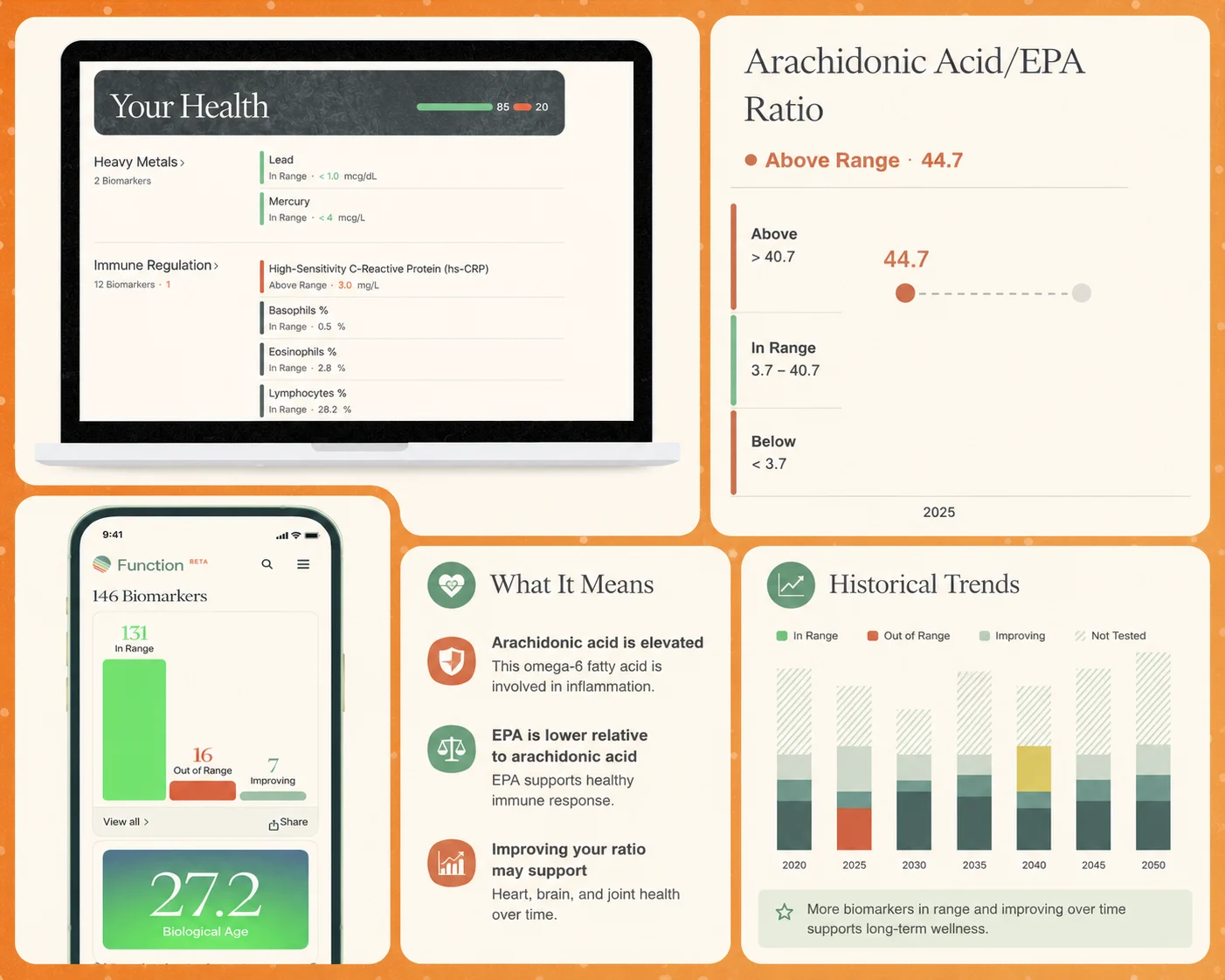
What lab tests are included in Function Health?
Function includes 100+ biomarkers at the initial draw and 60+ tests at a mid-year follow-up. Its advertised 160+ annual lab tests include repeats, rather than 160 different biomarkers. The panel includes ApoB, Lp(a), advanced LDL particles, thyroid hormones and antibodies, sex hormones, vitamin D, iron studies, omega fatty acids, lead, mercury, and routine blood and urine testing.
| Category | Distinct entries | Included tests and calculated results |
|---|---|---|
| Complete Blood Count | 15 | Basophils, Eosinophils, Hematocrit, Hemoglobin, Lymphocytes, Mean Corpuscular Hemoglobin (MCH), Mean Corpuscular Hemoglobin Concentration (MCHC), Mean Corpuscular Volume (MCV), Mean Platelet Volume (MPV), Monocytes, Neutrophils, Platelet Count, Red Blood Cell Count, Red Cell Distribution Width (RDW), White Blood Cell Count |
| Heart & Lipids | 14 | Apolipoprotein B, Cholesterol/HDL Ratio, HDL Cholesterol, Large HDL Particles, LDL Cholesterol, LDL Particle Number, LDL Pattern, LDL Peak Size, Lipoprotein (a), Medium LDL Particles, Non-HDL Cholesterol, Small LDL Particles, Total Cholesterol, Triglycerides |
| Metabolic & Diabetes | 5 | Fasting Insulin, Glucose, Hemoglobin A1c, Leptin, Uric Acid |
| Liver | 9 | Alanine Aminotransferase, Albumin, Albumin/Globulin Ratio, Alkaline Phosphatase, Aspartate Aminotransferase, Gamma-Glutamyl Transferase, Globulin, Total Bilirubin, Total Protein |
| Kidney & Electrolytes | 9 | BUN (Blood Urea Nitrogen), BUN/Creatinine Ratio, Calcium, Carbon Dioxide (CO2), Chloride, Creatinine, eGFR (Estimated Glomerular Filtration Rate), Potassium, Sodium |
| Thyroid | 5 | Free T3 (Triiodothyronine), Free T4 (Thyroxine), Thyroglobulin Antibodies, Thyroid Peroxidase Antibodies, Thyroid-Stimulating Hormone |
| Hormones | 10 | Anti-Mullerian Hormone (AMH), Cortisol, DHEA-Sulfate, Estradiol (E2), Follicle Stimulating Hormone (FSH), Free Testosterone, Luteinizing Hormone (LH), Prolactin, Sex Hormone Binding Globulin (SHBG), Total Testosterone |
| Inflammation & Autoimmune | 5 | Anti-Nuclear Antibodies Pattern, Anti-Nuclear Antibodies Titer, Antinuclear Antibodies (ANA), High-Sensitivity C-Reactive Protein, Rheumatoid Factor |
| Nutrients | 9 | Ferritin, Homocysteine, Iron, Iron Saturation, Magnesium, Methylmalonic Acid, Total Iron Binding Capacity, Vitamin D (25-Hydroxy), Zinc |
| Omega-3/6 | 9 | Arachidonic Acid/EPA Ratio, Omega-3 DHA, Omega-3 DPA, Omega-3 EPA, Omega-3 Total, Omega-6 Arachidonic Acid, Omega-6 Linoleic Acid, Omega-6 Total, Omega-6/Omega-3 Ratio |
| Urinalysis | 20 | Urine Amorphous Sediment, Urine Appearance, Urine Bacteria, Urine Bilirubin, Urine Blood, Urine Calcium Oxalate Crystals, Urine Color, Urine Glucose, Urine Hyaline Casts, Urine Ketones, Urine Leukocyte Esterase, Urine Microalbumin, Urine Nitrite, Urine pH, Urine Protein, Urine Red Blood Cells, Urine Specific Gravity, Urine Squamous Epithelial Cells, Urine White Blood Cells, Urine Yeast |
| Cancer Screening | 3 | PSA Free, PSA Percent Free, PSA Total |
| Heavy Metals | 2 | Lead, Mercury |
| Other | 4 | ABO Blood Group, Amylase, Biological Age, Lipase |
| Total in our database | 119 | Each entry counted once; repeat testing excluded |
This table groups the distinct entries in our database, including calculated results. Some markers depend on sex, eligibility, or reflex testing. The included-test list was rechecked against Function’s website on October 16, 2026. For more detail, see the full Function Health biomarker list.
How does Function Health testing work?
Join through Function’s website, complete the health-history questions, and schedule your initial lab visit. Function works with a nationwide laboratory network, including Quest Diagnostics, and offers at-home draws in selected locations for an additional charge. Most people can complete initial testing in one appointment; some circumstances require a second visit. Follow the preparation instructions in your order.
Results appear in your account as the lab finishes processing them. A clinician reviews the results and your health history, then provides written notes and guidance. Specialty tests can take longer than routine bloodwork, so the first results and the complete report may arrive at different times.
The membership also includes a smaller follow-up panel midway through the year. Check which markers will be repeated and when the visit must be used; a mid-year retest does not repeat every test from the initial panel. Function’s standard membership provides testing and written interpretation, without ongoing treatment or prescriptions.
What was my experience with Function Health’s results?
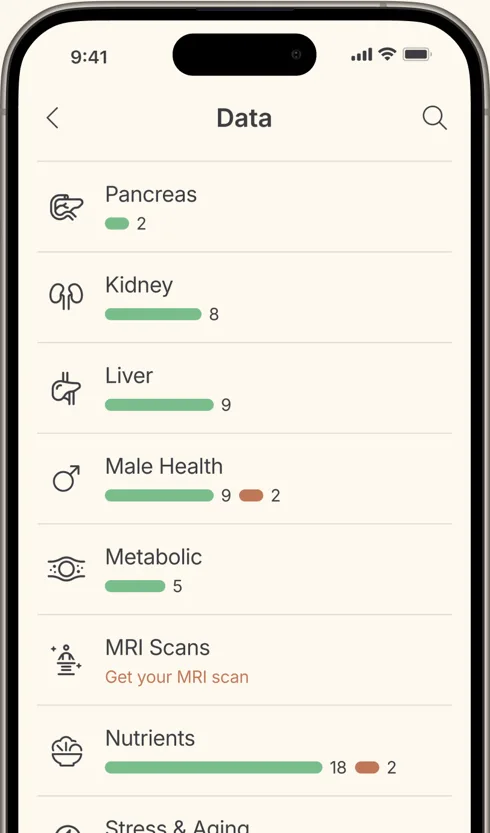
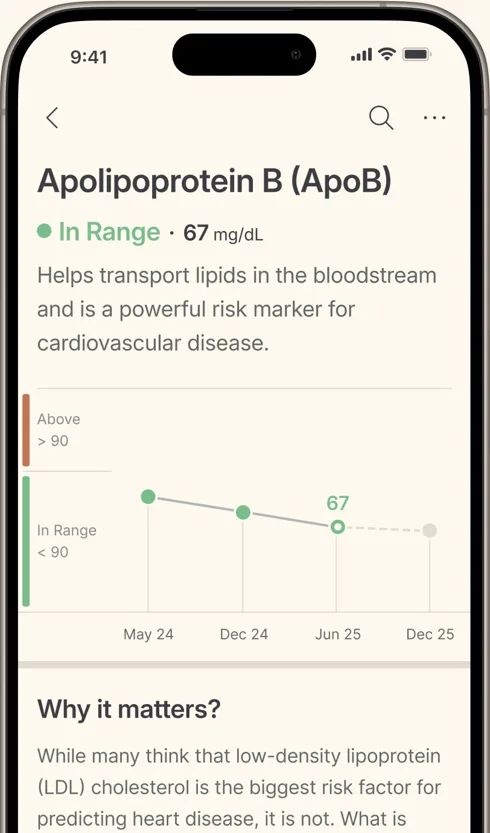
The blood draw was straightforward. Function made it easy to order advanced tests such as ApoB, Lp(a), lipid particles, and hormones together. The dashboard was the strongest part of my experience: I could browse by body system, open an individual result, and see its range and history.
In the app examples below, the first screen summarizes results, the second organizes them by category, and the third shows ApoB over several draws. Function offers web, iPhone, and Android apps. I tend to use the web dashboard when reviewing more of my data at once.
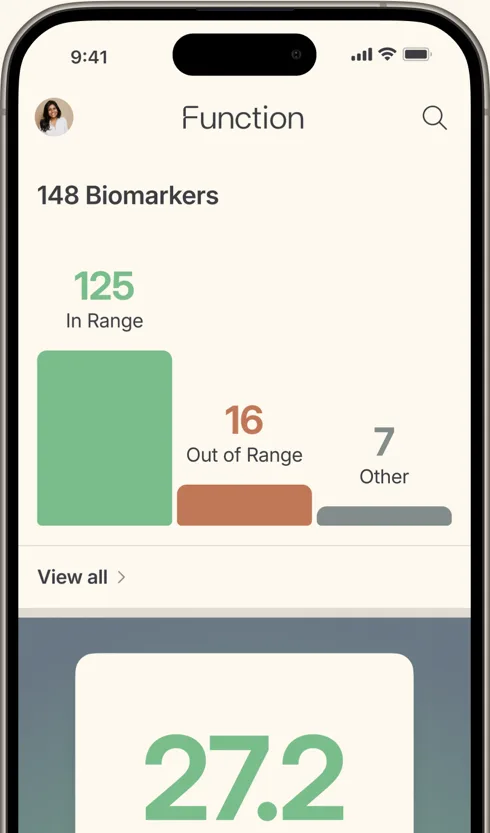
On October 12, Function and Google Health announced a partnership to let U.S. users import Function lab results into the Google Health app later this fall.
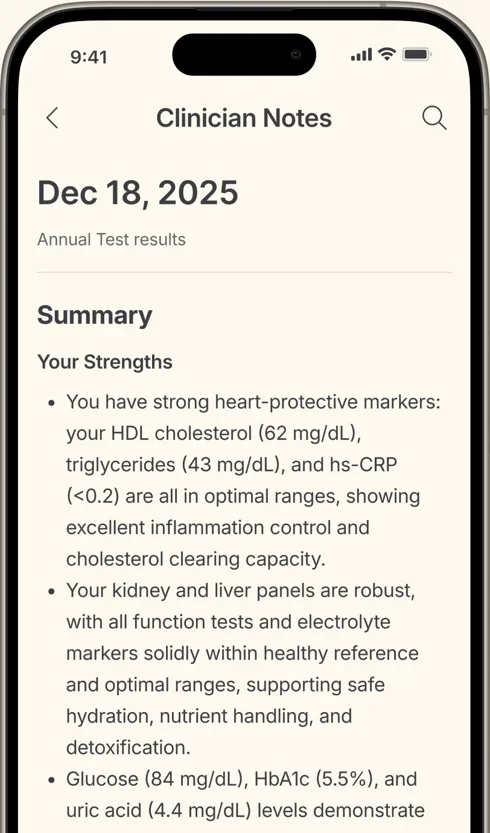
My clinician-written summary mostly restated flagged results and offered broad lifestyle and supplement suggestions. It gave me context, but I wanted more discussion of my history and what to do next. That is the main limitation I would consider before renewing.
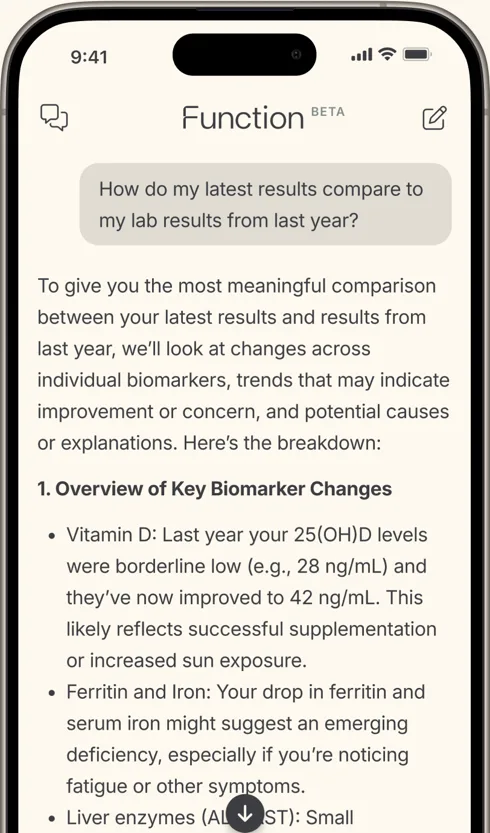
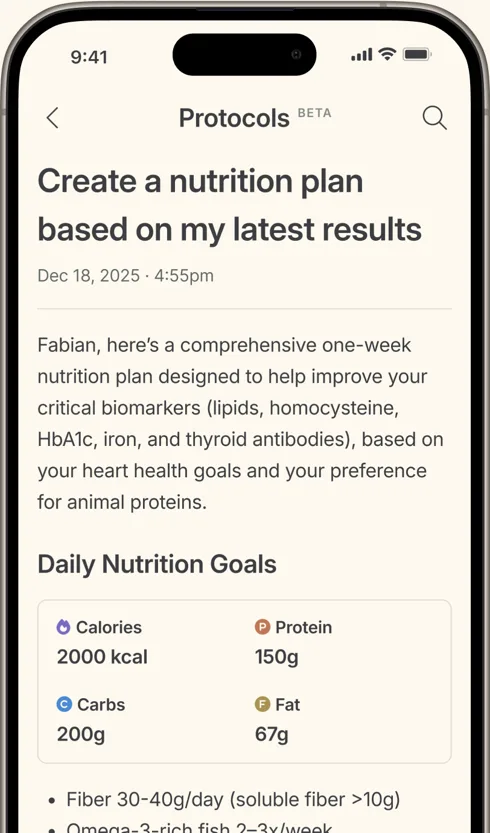
The example note below shows how Function presents a written summary of results. Function also offers Private AI Chat and Protocols; the promotional screenshots show those features labeled beta. They provide another way to explore results and plans, while the standard membership still does not establish an ongoing relationship with a treating physician.
Is Function Health worth $365 a year?
Function Health’s $365 membership includes roughly $1,114 in lab tests, but competitors like Empirical now offer panels from $190.
Function’s price makes the most sense if you want its broader initial panel and will use the included follow-up testing. Advanced LDL particles, thyroid antibodies, omega fatty acids, and heavy metals distinguish it from less expensive panels focused on routine and cardiovascular testing.
If you already know which few tests you want, compare the cost of ordering those directly. If you want to discuss results, treatment, or medication, compare doctor access as well as testing. A longer marker list does not establish that every test will be useful for you.
The standard membership is $365 annually and renews at the then-current rate. At-home draws, optional tests, and imaging cost extra; New York and New Jersey laboratory fees may apply. Function does not bill insurance, although eligible HSA/FSA funds can be used.
See the Function Health cost guide for fees and renewal, the discount-code history for offers, or the detailed value analysis for lab-price comparisons and methodology.
How does Function Health compare with competitors?
Function Health's primary competitors are Superpower, Empirical Health, and Whoop Advanced Labs.
Superpower lists a $349 annual membership and advertises a limited-time $150 discount. Empirical offers a lower-cost single panel, doctor access, and a separate repeat-testing program. This table compares the named packages; it does not treat a one-time purchase as a year of testing.
Swipe to compare providers →
Annual test totals can include repeat tests. Distinct marker counts below count each marker once. One-time panels and subscriptions cover different amounts of testing.
| Feature | Function Health Annual Membership | Superpower Basic | Empirical Health Comprehensive Health Panel |
|---|---|---|---|
| First year / purchase | $365 for the first year | $349 for the first year | $190 one-time |
| Renewal / repeat testing | $365/year currently; renews at the then-current price | Annual membership; confirm the renewal rate at checkout | No annual lab subscription; additional testing is purchased separately |
| Included draws | 2: initial panel + smaller follow-up | Baseline + follow-up advertised; confirm selected offer at checkout | 1 lab visit |
| Extra costs | Add-on tests and imaging cost extra. NY/NJ lab fees may apply. | Limited-time $150 discount to $199 advertised; confirm eligibility and renewal. At-home draws, add-ons and NY/NJ charges may cost extra. | Optional tests and medical services may have separate charges; confirm the selected plan. |
| Clinician access | Clinician-reviewed results and notes; not ongoing medical care | Care-team messaging and results guidance | Physician-led service; confirm medical-visit coverage for your plan |
| Advertised annual tests | 160+ tests including repeats, not 160 unique markers | 150+ across baseline and follow-up advertised; includes repeats; offer pages differ | Annual total not verified; see the distinct marker count below |
| Price source | Official pricingChecked 2026-10-06 | Official pricingChecked 2026-10-16 | Official pricingChecked 2026-10-06 |
| Distinct markers in our dataset | 119 | 59 | 100 |
| Features | |||
| iOS app | ✓ | ✓ | ✓ |
| Web app | ✓ | ✓ | ✓ |
| Android app | ✓ | — | ✓ |
| Wearable integration | ✓ | ✓ | ✓ |
| Prescriptions | — | ✓ | ✓ |
Function’s additional coverage compared with Superpower is concentrated in advanced lipids, omega fatty acids, and heavy metals. The table below groups the overlap and differences in our panel database. For care and pricing differences, read Function Health vs Empirical Health or Function Health vs Superpower.
| Category | In both | Function only | Superpower only |
|---|---|---|---|
| Complete Blood Count | 10 Basophils, Eosinophils, Hematocrit, Hemoglobin, Lymphocytes, Monocytes, Neutrophils, Platelet Count, Red Blood Cell Count, White Blood Cell Count | 5 Mean Corpuscular Hemoglobin (MCH), Mean Corpuscular Hemoglobin Concentration (MCHC), Mean Corpuscular Volume (MCV), Mean Platelet Volume (MPV), Red Cell Distribution Width (RDW) | — |
| Heart & Lipids | 7 Apolipoprotein B, Cholesterol/HDL Ratio, HDL Cholesterol, LDL Cholesterol, Non-HDL Cholesterol, Total Cholesterol, Triglycerides | 7 Large HDL Particles, LDL Particle Number, LDL Pattern, LDL Peak Size, Lipoprotein (a), Medium LDL Particles, Small LDL Particles | 1 Atherogenic Index of Plasma |
| Metabolic & Diabetes | 4 Fasting Insulin, Glucose, Hemoglobin A1c, Uric Acid | 1 Leptin | — |
| Liver | 8 Alanine Aminotransferase, Albumin, Albumin/Globulin Ratio, Alkaline Phosphatase, Aspartate Aminotransferase, Gamma-Glutamyl Transferase, Globulin, Total Bilirubin | 1 Total Protein | 2 Direct Bilirubin, Indirect Bilirubin |
| Kidney & Electrolytes | 8 BUN (Blood Urea Nitrogen), BUN/Creatinine Ratio, Calcium, Carbon Dioxide (CO2), Creatinine, eGFR (Estimated Glomerular Filtration Rate), Potassium, Sodium | 1 Chloride | — |
| Thyroid | 4 Free T3 (Triiodothyronine), Free T4 (Thyroxine), Thyroid Peroxidase Antibodies, Thyroid-Stimulating Hormone | 1 Thyroglobulin Antibodies | — |
| Hormones | 7 DHEA-Sulfate, Estradiol (E2), Follicle Stimulating Hormone (FSH), Luteinizing Hormone (LH), Prolactin, Sex Hormone Binding Globulin (SHBG), Total Testosterone | 3 Anti-Mullerian Hormone (AMH), Cortisol, Free Testosterone | 1 IGF-1 (Insulin-like Growth Factor 1) |
| Inflammation & Autoimmune | 1 High-Sensitivity C-Reactive Protein | 4 Anti-Nuclear Antibodies Pattern, Anti-Nuclear Antibodies Titer, Antinuclear Antibodies (ANA), Rheumatoid Factor | 1 ESR (Erythrocyte Sedimentation Rate) |
| Nutrients | 2 Homocysteine, Vitamin D (25-Hydroxy) | 7 Ferritin, Iron, Iron Saturation, Magnesium, Methylmalonic Acid, Total Iron Binding Capacity, Zinc | 2 Folate, Vitamin B12 |
| Omega-3/6 | — | 9 Arachidonic Acid/EPA Ratio, Omega-3 DHA, Omega-3 DPA, Omega-3 EPA, Omega-3 Total, Omega-6 Arachidonic Acid, Omega-6 Linoleic Acid, Omega-6 Total, Omega-6/Omega-3 Ratio | — |
| Urinalysis | — | 20 Urine Amorphous Sediment, Urine Appearance, Urine Bacteria, Urine Bilirubin, Urine Blood, Urine Calcium Oxalate Crystals, Urine Color, Urine Glucose, Urine Hyaline Casts, Urine Ketones, Urine Leukocyte Esterase, Urine Microalbumin, Urine Nitrite, Urine pH, Urine Protein, Urine Red Blood Cells, Urine Specific Gravity, Urine Squamous Epithelial Cells, Urine White Blood Cells, Urine Yeast | — |
| Cancer Screening | 1 PSA Total | 2 PSA Free, PSA Percent Free | — |
| Heavy Metals | — | 2 Lead, Mercury | — |
| Other | — | 4 ABO Blood Group, Amylase, Biological Age, Lipase | — |
| Total | 52 shared | 67 of 119 | 7 of 59 |
Coverage reflects the named packages in our database; individual report fields and calculated values are counted separately. Confirm the current list and any add-ons before ordering.
Other testing models include WHOOP Advanced Labs for its wearable experience, Vitals Vault for pay-once panels, and Goodlabs for eligible blood donors. The Function alternatives guide compares these options in more detail.
What do other Function Health users say?
The user reports I reviewed often praised panel breadth and the results dashboard. Recurring criticisms included generic written notes, support problems, and frustration importing older results. Function has since added historical-result imports, so older complaints may describe an earlier version. See the Function Health reviews guide for the source threads and the difference between app ratings and reports about testing or follow-up.
Function Health FAQ
Is Function Health worth it?
Function Health was good value when it launched at $499 and now costs $365 a year. Our August 2026 comparison priced overlapping lab products at about $1,114 for a single draw ordered separately through Marek Diagnostics. Newer competitors offer cheaper options, including Empirical Health’s $190 one-time panel, though coverage differs and Function includes a mid-year retest.
Is Function Health legit?
Yes. I paid for Function Health, completed its lab process, and received results and clinician-written notes. Function arranges testing through a nationwide laboratory network and presents the results in its dashboard. The standard membership includes written review, without ongoing treatment or prescriptions.
What are the best Function Health alternatives?
Compare Empirical Health's $190 single panel and separate $399 repeat-testing program, Superpower's $349 annual membership (currently advertised with a $150 discount), and WHOOP Advanced Labs' $349 two-test subscription. The right comparison depends on the tests, repeat visits, and doctor access you want. Our alternatives guide also covers pay-once and blood-donation options.
How many biomarkers does Function Health test?
Function tests 100+ biomarkers at the initial annual draw and re-tests about 60 at a mid-year visit, which it markets as 160 biomarkers total. The panel covers heart, metabolic, thyroid, hormones, nutrients, liver, kidney, and other testing areas. Some tests depend on sex or eligibility; optional add-ons cost extra.
Does Function Health accept insurance?
No. Function Health does not bill insurance, but members can use eligible HSA or FSA funds. Whether it costs less than insured testing depends on your plan, deductible, medical indications, and which tests your clinician orders.
Function Health compared with other panels
- Function Health vs InsideTracker
100+ biomarkers twice a year vs an athlete-focused panel with an action plan.
- Function Health vs Mito Health
The category leader vs a doctor-reviewed longevity panel that undercuts it on price.
- Function Health vs Marek Health
Broad preventive screening vs a hormone- and TRT-focused panel with a clinician review.
- Function Health vs Everlywell
A membership with 100+ markers vs Everlywell's one-off 83-biomarker mail-in kit.
- Function Health vs Empirical Health
The best-known panel vs a physician-led service with medication and lifestyle guidance.
References and review method
I paid for Function Health and reviewed my lab process, results, clinician notes, and dashboard. The app images are Function’s public promotional examples, not my personal results. Price and the included-test list were rechecked October 16, 2026; individual experience describes the version I used. See our author background and editorial approach.
- Function: how it works — standard price, initial testing, mid-year retesting, and clinician review.
- Function: included tests — biomarkers, calculated results, and add-ons.
- Function FAQ — preparation, timing, medical-service scope, and membership terms.
- Function’s App Store listing — promotional screenshots, including the July 2026 examples shown here.
- Superpower and Empirical’s Comprehensive Health Panel — competitor pricing and scope.
- Function Health user discussions — anecdotal reports; specific threads are linked in our reviews guide.