Function Health vs Superpower
By Elo. Last updated October 16, 2026.

Offer checked October 16, 2026: Superpower’s comparison pages advertise $349/year, discounted by $150 to $199, with a baseline and follow-up. Its homepage and FAQ describe one annual draw. Confirm the included draws and renewal price for your selected offer at checkout.
Function Health and Superpower are two leading biomarker testing memberships. Both advertise 100+ biomarkers, but they differ in price, panel breadth, and how they count biomarkers.
Function is $365 per year vs Superpower at $349, both include two draws, and both share 52 biomarkers. Function tests 67 that Superpower doesn't. Superpower tests 7 that Function doesn't.
I've personally tested Function Health and gone through its full results experience, and I reviewed Superpower's panel and membership in detail on their own website. The two look similar on the surface, so this page digs into where they actually diverge.
Below I compare the two side by side: pricing, the lab tests included, the two apps screen by screen, and an honest take on which is better for different goals.
Function vs Superpower comparison table
Swipe to compare providers →
Annual test totals can include repeat tests. Distinct marker counts below count each marker once. One-time panels and subscriptions cover different amounts of testing.
| Feature | Function Health Annual Membership | Superpower Basic |
|---|---|---|
| First year / purchase | $365 for the first year | $349 for the first year |
| Renewal / repeat testing | $365/year currently; renews at the then-current price | Annual membership; confirm the renewal rate at checkout |
| Included draws | 2: initial panel + smaller follow-up | Baseline + follow-up advertised; confirm selected offer at checkout |
| Extra costs | Add-on tests and imaging cost extra. NY/NJ lab fees may apply. | Limited-time $150 discount to $199 advertised; confirm eligibility and renewal. At-home draws, add-ons and NY/NJ charges may cost extra. |
| Clinician access | Clinician-reviewed results and notes; not ongoing medical care | Care-team messaging and results guidance |
| Advertised annual tests | 160+ tests including repeats, not 160 unique markers | 150+ across baseline and follow-up advertised; includes repeats; offer pages differ |
| Price source | Official pricingChecked 2026-10-06 | Official pricingChecked 2026-10-16 |
| Distinct markers in our dataset | 119 | 59 |
| Features | ||
| iOS app | ✓ | ✓ |
| Web app | ✓ | ✓ |
| Android app | ✓ | — |
| Wearable integration | ✓ | ✓ |
| Prescriptions | — | ✓ |
Function vs Superpower lab tests included
Function and Superpower share 52 biomarkers: things like ApoB, HbA1c, hs-CRP, vitamin D, BUN, liver enzymes, and so on.
Function tests 67 that Superpower doesn't: omega-3 and omega-6 fatty acids, lipid particles, and heavy metals. If these matter to you, then you likely want to choose Function.
Superpower tests 7 biomarkers that Function doesn't, including fasting insulin, IGF-1, ESR, folate, and B12. IGF-1 in particular is useful for people on peptides. Superpower's optional add-ons do let you choose Lp(a) and the LDL particle measurements.
Overall, Function is stronger on baseline breadth. Superpower now looks stronger than before on general screening completeness, especially with urinalysis and iron studies.
| Category | In both | Function only | Superpower only |
|---|---|---|---|
| Complete Blood Count | 10 Basophils, Eosinophils, Hematocrit, Hemoglobin, Lymphocytes, Monocytes, Neutrophils, Platelet Count, Red Blood Cell Count, White Blood Cell Count | 5 Mean Corpuscular Hemoglobin (MCH), Mean Corpuscular Hemoglobin Concentration (MCHC), Mean Corpuscular Volume (MCV), Mean Platelet Volume (MPV), Red Cell Distribution Width (RDW) | — |
| Heart & Lipids | 7 Apolipoprotein B, Cholesterol/HDL Ratio, HDL Cholesterol, LDL Cholesterol, Non-HDL Cholesterol, Total Cholesterol, Triglycerides | 7 Large HDL Particles, LDL Particle Number, LDL Pattern, LDL Peak Size, Lipoprotein (a), Medium LDL Particles, Small LDL Particles | 1 Atherogenic Index of Plasma |
| Metabolic & Diabetes | 4 Fasting Insulin, Glucose, Hemoglobin A1c, Uric Acid | 1 Leptin | — |
| Liver | 8 Alanine Aminotransferase, Albumin, Albumin/Globulin Ratio, Alkaline Phosphatase, Aspartate Aminotransferase, Gamma-Glutamyl Transferase, Globulin, Total Bilirubin | 1 Total Protein | 2 Direct Bilirubin, Indirect Bilirubin |
| Kidney & Electrolytes | 8 BUN (Blood Urea Nitrogen), BUN/Creatinine Ratio, Calcium, Carbon Dioxide (CO2), Creatinine, eGFR (Estimated Glomerular Filtration Rate), Potassium, Sodium | 1 Chloride | — |
| Thyroid | 4 Free T3 (Triiodothyronine), Free T4 (Thyroxine), Thyroid Peroxidase Antibodies, Thyroid-Stimulating Hormone | 1 Thyroglobulin Antibodies | — |
| Hormones | 7 DHEA-Sulfate, Estradiol (E2), Follicle Stimulating Hormone (FSH), Luteinizing Hormone (LH), Prolactin, Sex Hormone Binding Globulin (SHBG), Total Testosterone | 3 Anti-Mullerian Hormone (AMH), Cortisol, Free Testosterone | 1 IGF-1 (Insulin-like Growth Factor 1) |
| Inflammation & Autoimmune | 1 High-Sensitivity C-Reactive Protein | 4 Anti-Nuclear Antibodies Pattern, Anti-Nuclear Antibodies Titer, Antinuclear Antibodies (ANA), Rheumatoid Factor | 1 ESR (Erythrocyte Sedimentation Rate) |
| Nutrients | 2 Homocysteine, Vitamin D (25-Hydroxy) | 7 Ferritin, Iron, Iron Saturation, Magnesium, Methylmalonic Acid, Total Iron Binding Capacity, Zinc | 2 Folate, Vitamin B12 |
| Omega-3/6 | — | 9 Arachidonic Acid/EPA Ratio, Omega-3 DHA, Omega-3 DPA, Omega-3 EPA, Omega-3 Total, Omega-6 Arachidonic Acid, Omega-6 Linoleic Acid, Omega-6 Total, Omega-6/Omega-3 Ratio | — |
| Urinalysis | — | 20 Urine Amorphous Sediment, Urine Appearance, Urine Bacteria, Urine Bilirubin, Urine Blood, Urine Calcium Oxalate Crystals, Urine Color, Urine Glucose, Urine Hyaline Casts, Urine Ketones, Urine Leukocyte Esterase, Urine Microalbumin, Urine Nitrite, Urine pH, Urine Protein, Urine Red Blood Cells, Urine Specific Gravity, Urine Squamous Epithelial Cells, Urine White Blood Cells, Urine Yeast | — |
| Cancer Screening | 1 PSA Total | 2 PSA Free, PSA Percent Free | — |
| Heavy Metals | — | 2 Lead, Mercury | — |
| Other | — | 4 ABO Blood Group, Amylase, Biological Age, Lipase | — |
| Total | 52 shared | 67 of 119 | 7 of 59 |
Where Function beats Superpower
- Comprehensive biomarker coverage: Function Health includes 100+ real biomarkers in their standard panel without requiring add-ons
- Two draws a year: Function retests you at six months, so you see whether a change you made actually moved a marker
- Best value for comprehensive testing: At $365 for extensive coverage, it offers strong value for those who want the most complete picture of their health
- iPhone and Android apps: Function ships on both, plus a web dashboard. Superpower is iPhone and web only
Where Superpower is stronger than Function
- Lower regular price: Superpower is $349/year, $16 below Function’s regular $365 price.
- Sleek UI Superpower's interfce is very polished and attractive.
- More specific advice: Superpower's AI will name a dose and a recheck window, where Function's tends to restate your numbers
- Human clinician in the app: Superpower puts a care team behind a message button, with a stated reply time of under 24 hours on weekdays
Function vs Superpower pricing
Function Health normally costs $365 per year. Superpower officially lists $349 per year for two blood draws, checked October 16, 2026. Superpower also advertises a limited-time $150 discount to $199; confirm eligibility and renewal terms. At regular prices, the $16 annual difference makes panel breadth and follow-up quality more useful deciding factors. The separate Function Health value analysis compares the $365 membership with buying the same tests à la carte and through insurance.
Function vs Superpower app and results experience
Both Function and Superpower have an iPhone app and a web dashboard; Function also has Android. Function's iPhone app has a 4.9 average across about 23,800 ratings. Superpower's iPhone app launched in January 2026 and is at a 4.9 average across about 1,000 ratings. Superpower does not have an Android app as of September 2026.
The home screen: markers out of range vs a single score
Function Health
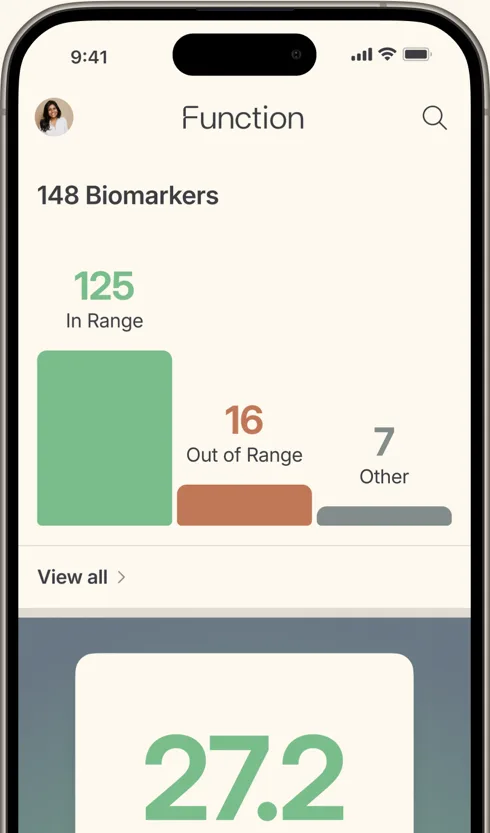
148 biomarkers, 16 of them out of range.
Superpower
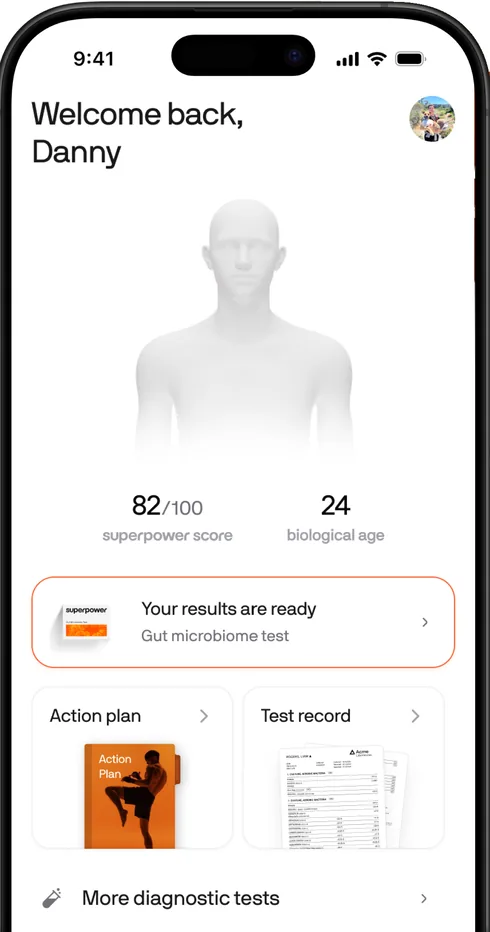
A score of 82 out of 100 and a biological age of 24.
Biomarker results: in range vs optimal
Function Health
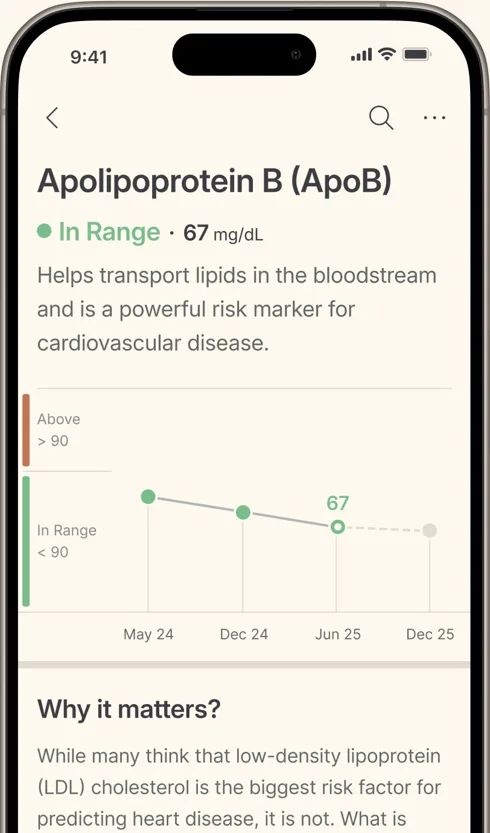
One marker per screen, with four draws of history.
Superpower
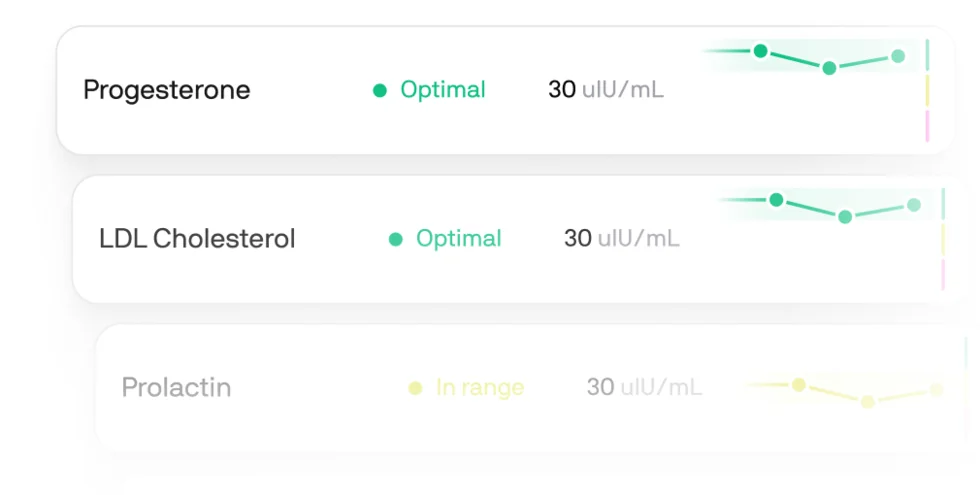
Rows graded Optimal, In range, or Out of range.
Asking the Function/Superpower app a question
Function Health
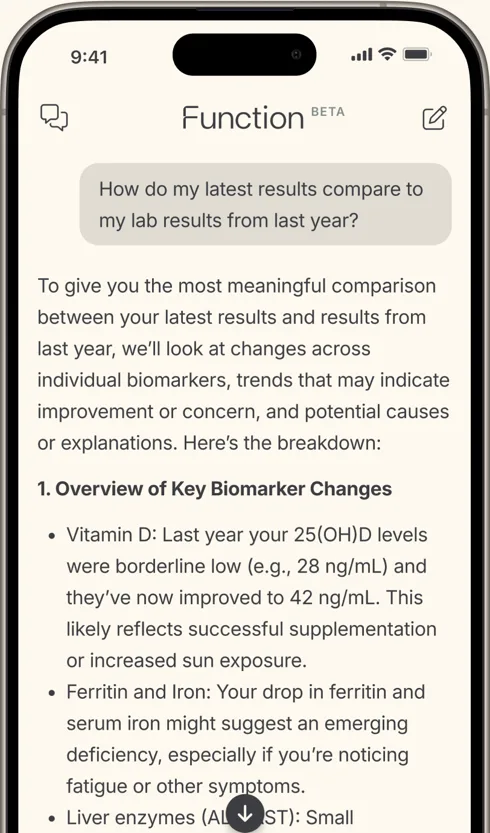
Explains what changed since your last draw.
Superpower
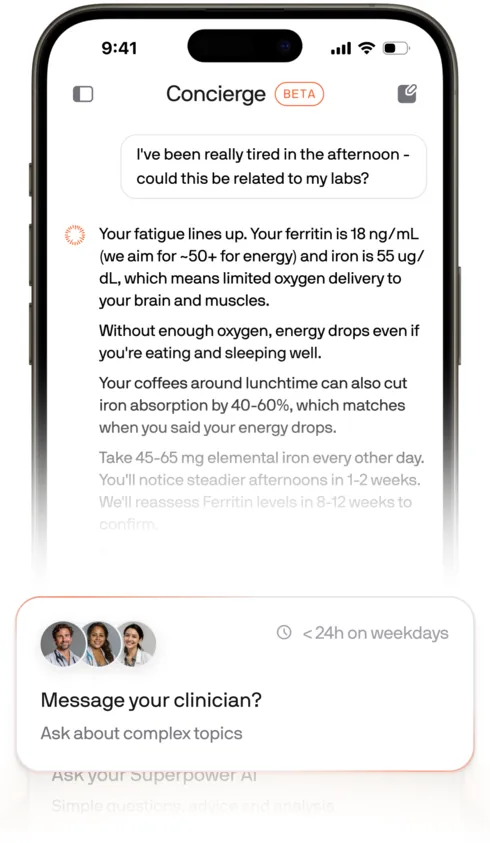
Names a dose, then offers a human clinician.
Turning results into a plan
Function Health
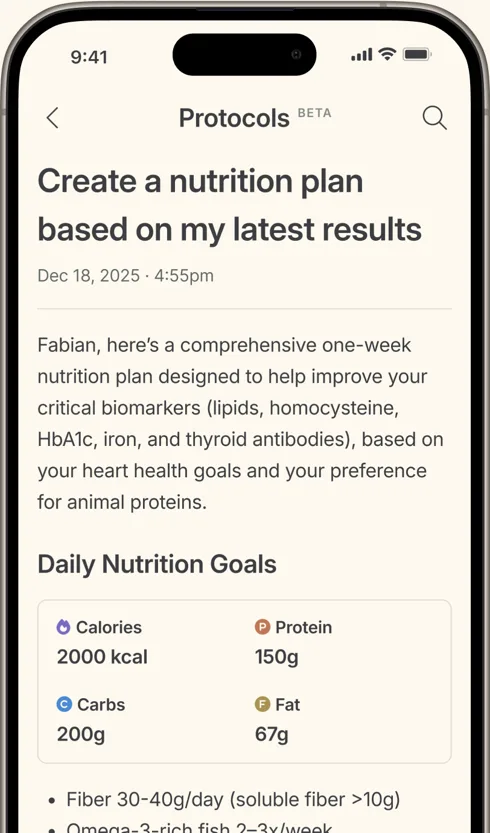
A nutrition plan with macros and food targets.
Superpower
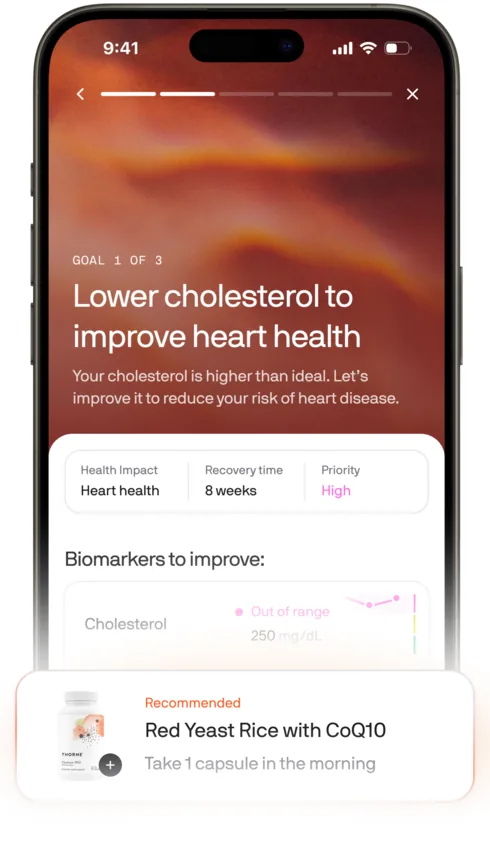
A goal, a recovery time, and a supplement to add.
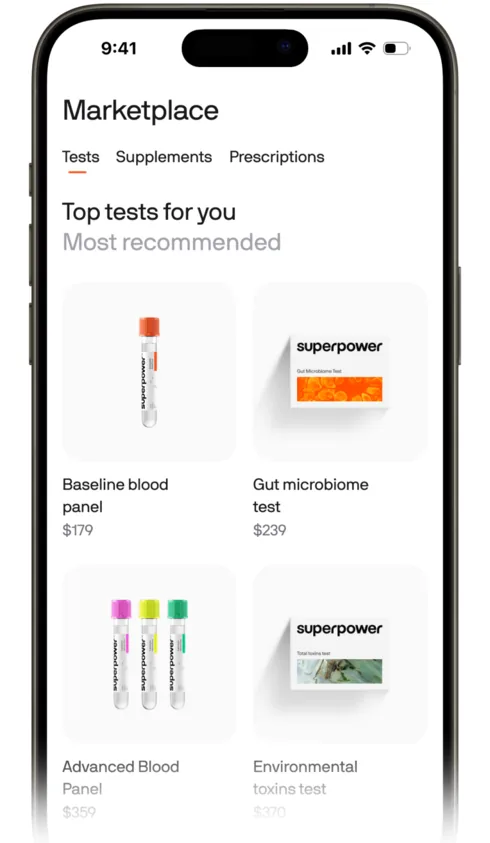
Superpower's marketplace
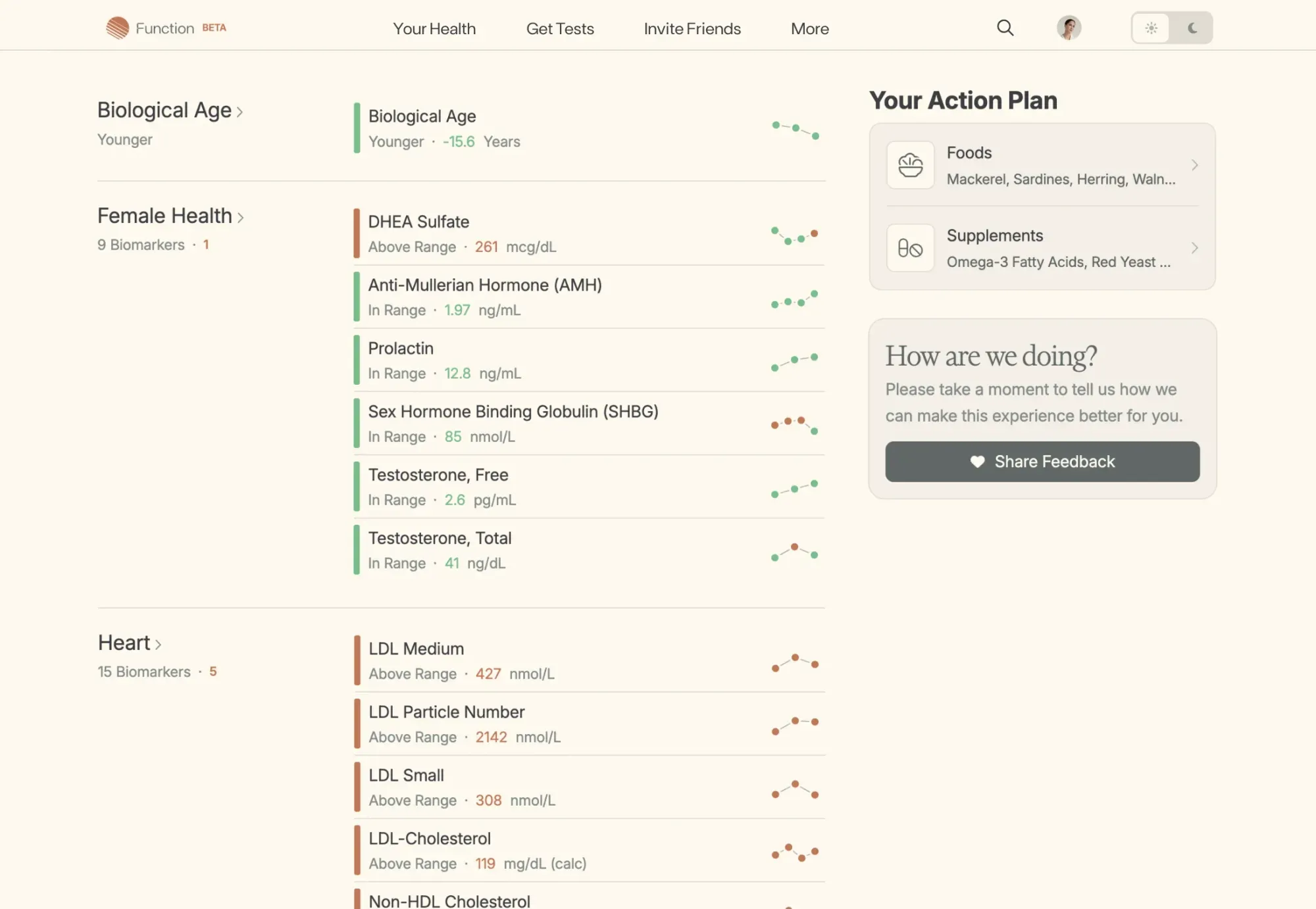
Function and Superpower both have web dashboards
Function's web dashboard groups every marker by body system with a sparkline for each, and puts an action plan in the sidebar. Superpower has a web app too and it's genuinely well designed, though I don't have a comparable capture of a real results page to show here.
One more difference worth knowing: Function's "clinician report" is largely AI-written, and it mostly restates your numbers in tidy paragraphs. Superpower pushes further on recommendations, but some of that advice points at products it sells.
Function vs Superpower: which is better?
For most people who want comprehensive bloodwork, Function is still the better pick. The prices are nearly identical and it's a stronger baseline panel.
Alternatives to Function Health and Superpower
If you're evaluating Function and Superpower, I'd also consider Empirical Health ($190), GoodLabs (variable), and OwnYourLabs (variable).- Empirical Health: Most of the same 100+ biomarkers as Function or Superpower, but physician-led and about half the price.
- Ulta Lab Tests: Pay-per-test model for those who want to select specific biomarkers, so that you can customize your panel.
- OwnYourLabs: Budget-friendly option with customized testing, similar to Ulta.
For more detail on either service on its own, see the Function Health review and the Superpower review.
References
- Function Health on the App Store (version 1.37, August 2026)
- Superpower on the App Store (version 1.1.4, August 2026)